Last Wednesday the Fed raised rates a quarter point. Same day, the 10-year Treasury yield closed above 5% for the first time since 2007.
Easy to lump those together. Fed hikes, yields go up, done. That's not what happened, and the difference matters if you own stocks or have a mortgage.
The Fed doesn't set the 10-year
The Fed sets one rate: what banks charge each other overnight.
The 10-year is different. It's what investors worldwide will accept to lend the US government money for ten years, and nobody sets it. It gets auctioned. Lately it's moved far more than the Fed has.
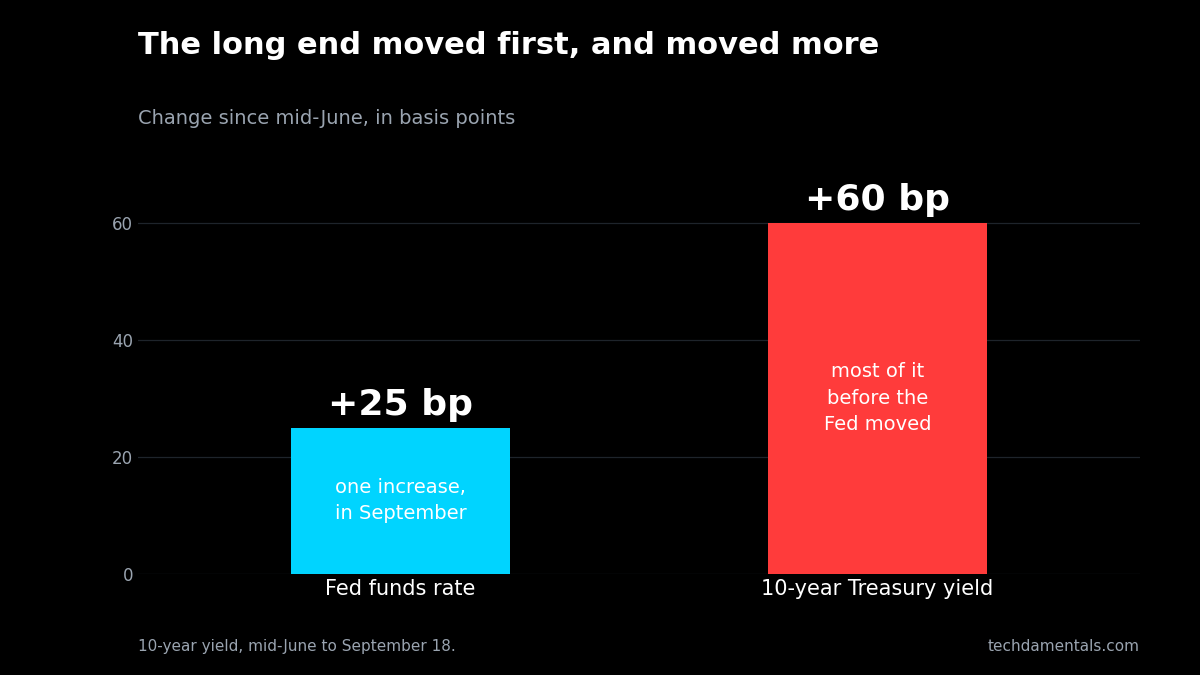
CHART1
Most of that 60 basis points showed up before the Fed even met. Deutsche Bank looked at the move since July and put the biggest chunk on term premium, the extra yield investors want for locking money up a decade. Next came a stronger economy. The Fed barely registered.
Why care? Your mortgage rate comes off the 10-year. So does the discount rate in pretty much every stock valuation. The Fed gets the headlines. The 10-year does the work.
Then Japan raised rates and the yen fell
Two days later, the Bank of Japan raised rates to 1.25%, the highest since 1995. You'd expect the yen to strengthen. It did the opposite, sliding past 157 to the dollar and ending the week down more than 2%.
Why? The vote. It was 7 to 2, the two no votes came from newer board members who favor easy money, and the press conference sounded soft. Sound familiar? Same as the Fed, just flipped. Everyone knew the hike was coming. What moved was the signal about what came next.
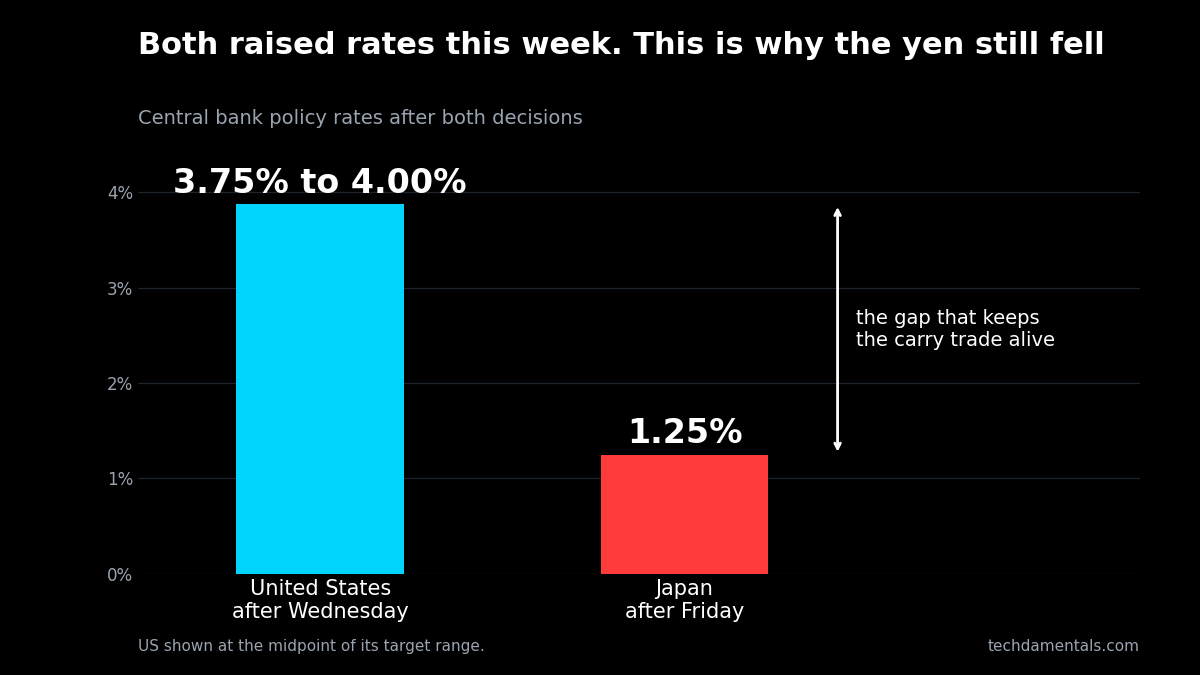
CHART2
That gap is the yen's whole problem. When rates in Japan sit this far below rates here, traders borrow yen at low cost and park the money somewhere higher-yielding. That trade quietly funds a lot of risk-taking worldwide.
So what does Japan have to do with your yields?
More than you'd think. Japan owns more US Treasuries than any other country, over a trillion dollars' worth.
Defending a weak yen takes dollars, and the quickest source is that Treasury pile. When a holder that big unloads, US yields go up.
Not a what-if. In early August the US and Japan stepped in together to prop up the yen, their first joint move in over a decade. Bloomberg reported this month that Japan likely funded part of it by reducing those holdings.
So when the US pushes Japan to raise rates, it isn't a favor. A stronger yen means Japan doesn't have to touch its American bonds. The US is protecting its own borrowing costs.
Where things are now
The 10-year dipped under 5% the day after the Fed, popped back Friday, and has sat just under it since.
The big swing factor is oil. It's dropped four days straight, and US crude slipped under $100 for the first time since August on hopes of US-Iran talks at the UN. This morning Trump told the General Assembly he expects a deal with Iran after the November 3 midterms, with more military action as the alternative.
Some perspective: he's given a post-midterm timeline before, and the 60-day window under June's agreement passed without a deal. Still, it's the variable that matters most. An end to the war is the one thing that could ease inflation without the Fed doing more.
What this doesn't tell you
Term premium isn't something you can look up. It's whatever's left after a model explains everything else, so treat it as a label for uncertainty, not a reading. Nobody knows how big the carry trade really