The Fed decides tomorrow at 2:00 PM Eastern, and close to 90% of a quarter-point increase is already sitting in the price of everything you own. Which sounds like it should make tomorrow a big deal. It's the opposite. When everyone already agrees on an outcome, the outcome isn't what moves anything. The surprise is.
What "priced in" actually means for you
Rates have sat between 3.50% and 3.75% all year. An increase takes them to 3.75% to 4.00%, and if you bought anything last week you already paid for that.
But futures aren't pricing one meeting. They're pricing a whole path.
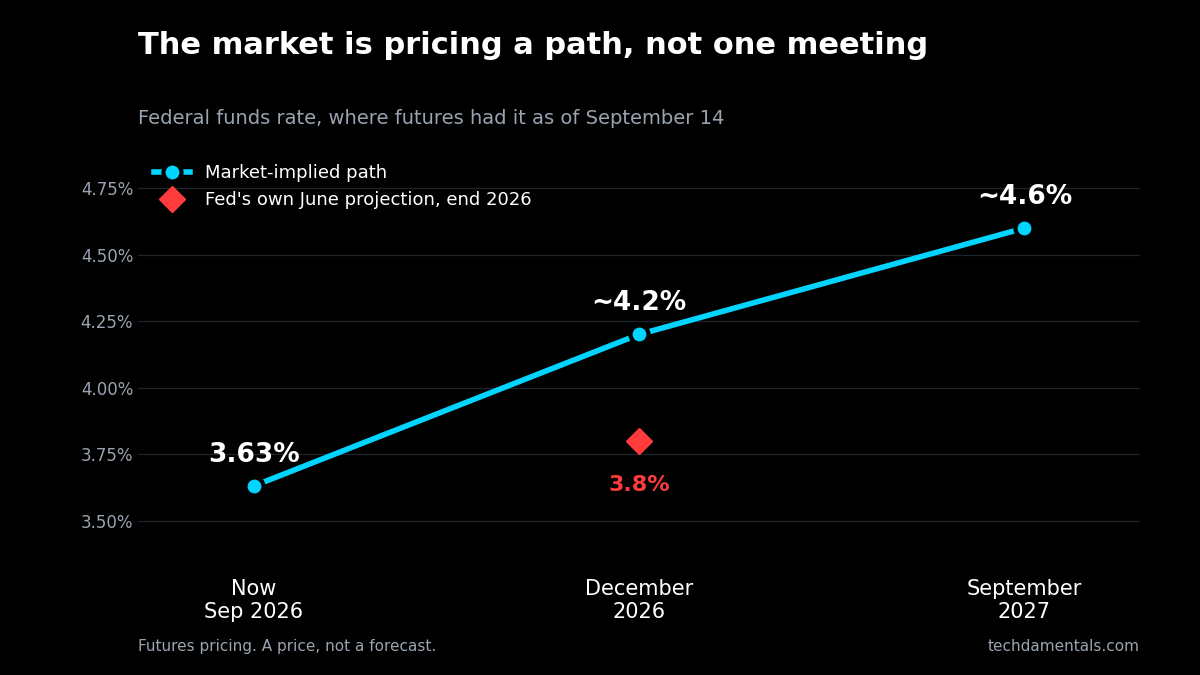
The blue line is where traders had rates going. The red diamond is where the Fed's own officials said they'd be back in June. The market is pricing a higher path than the Fed is. That gap is the real story tomorrow, and it shows up in the projections, not in the rate.
The same move, four different sizes
Here's the part that's actually useful. A rate is a weight on money that hasn't arrived yet, and the further out the money, the heavier the weight.
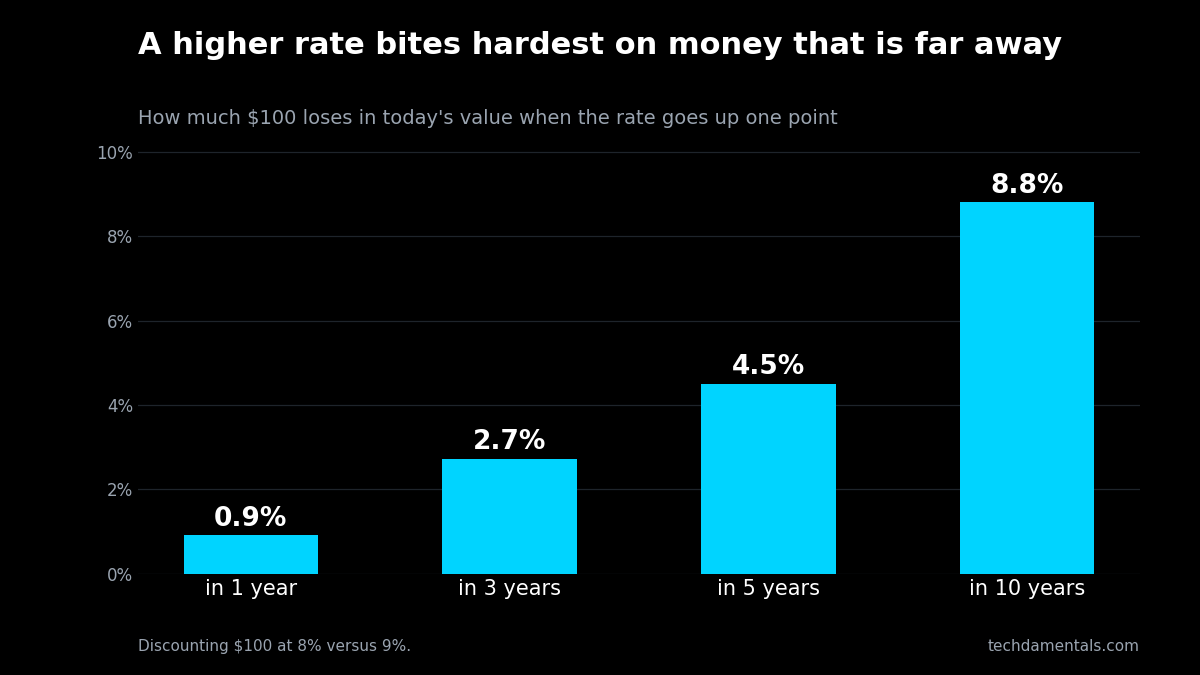
Run that logic across four things people are asking about this week:
| Where its value sits | What a rate move touches | |
|---|---|---|
| Semiconductors | Cash being earned now | The least of the four |
| Software | Profits years out | The math on those distant years |
| Bitcoin | No cash flows at all | Liquidity, not a valuation |
| Oil | Upstream of all of it | Mostly the dollar it's priced in |
Semis are earning today, so there's less distance for a rate to work on. Software keeps more of its value in years that haven't happened, so the same move does more to the arithmetic. Bitcoin has no cash flows to discount at all, so nothing is being revalued. It moves on how loose money feels.
Oil is the odd one out, and it's worth getting the direction right. Crude above $100 is part of why the Fed is in this spot. The causality runs oil to inflation to Fed, not the other way. Tomorrow barely touches crude. Crude is why tomorrow is happening.
What to actually watch
Not the number. Two other things, both at 2:00.
Every quarter each official marks where they think rates are headed, and the Fed publishes them anonymously as a scatter of dots. In June the middle of that scatter sat at 3.8% for the end of this year. Where it sits now is the whole ballgame. Then Chair Warsh takes questions half an hour later, and whether he frames a move as one and done or as the start of something matters more than the move.
One increase changes the weight a little. The path changes everything downstream of it, and the path is what a ten-year valuation is really made of.
What this doesn't tell you
Ninety percent priced is an average of traders who disagree, not a fact, and one time in ten the other thing happens. Priced in also doesn't mean no reaction: positioning unwinds, and day one is mostly noise either way. The duration logic above plays out over months. And underneath all of it is oil, which is moving on a war, and no dot plot forecasts a war.
Most of a ten-year model's answer sits in those far-out years, which is exactly where nobody has much to go on. Techdamentals runs four separate methods rather than one, shows every input each of them used, and when they disagree it says so on the page instead of averaging the disagreement into one tidy number.