Nvidia's board authorized another $150 billion for share repurchases this morning. It's the largest single authorization any company has ever announced, and it brings the total still available to $235 billion.
Here's what that does to the per-share number. About 4%.
A buyback isn't cash in your pocket
A dividend is money. It lands in your account and it's yours.
A buyback is different. The company spends its own cash to take shares off the market and retire them. Fewer shares exist afterward. If you held on, nothing arrived in your account. What you have instead is a slightly larger claim on the same business.
The cash went somewhere. Just not to you. It went to whoever handed over their shares.
Same pie, fewer slices. That's the whole mechanism.
$235 billion, and 4%
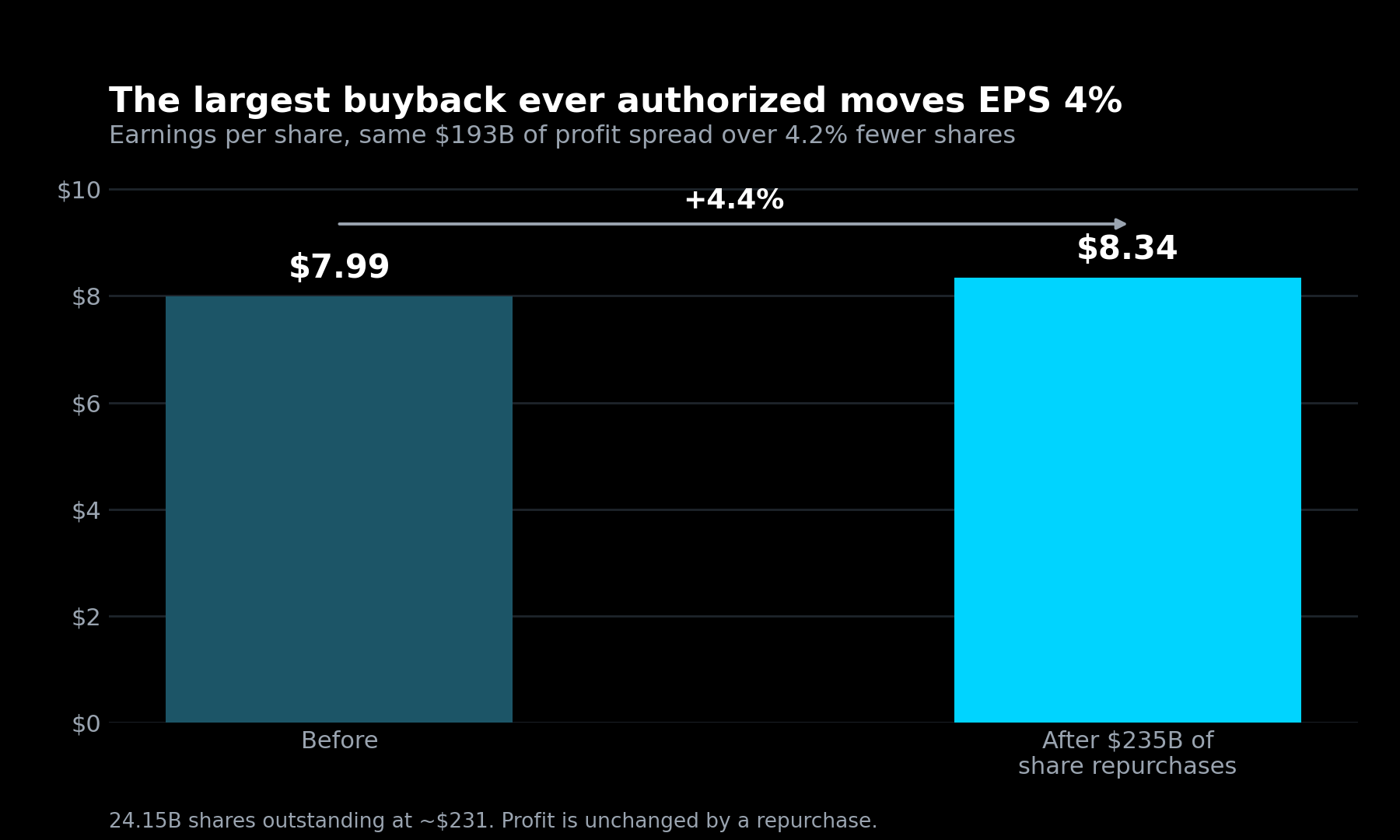
Nvidia has about 24.15 billion shares outstanding, trading near $231. At that price, $235 billion retires roughly a billion of them. Call it 4.2% of the company.
The profit doesn't change. Nvidia earned about $193 billion over the last twelve months, and a repurchase doesn't add a dollar to that. Spread the same profit over 4.2% fewer shares and earnings per share goes from roughly $7.99 to $8.34.
So the largest authorization in corporate history lifts the per-share number about 4.4%.
That isn't a knock on it. It's scale. When a company is worth $5.58 trillion, $235 billion is 4% of it. For context, it's close to two years of everything the business generates after capital spending, and roughly ten years of its current dividend.
The part that decides whether it worked
Price.
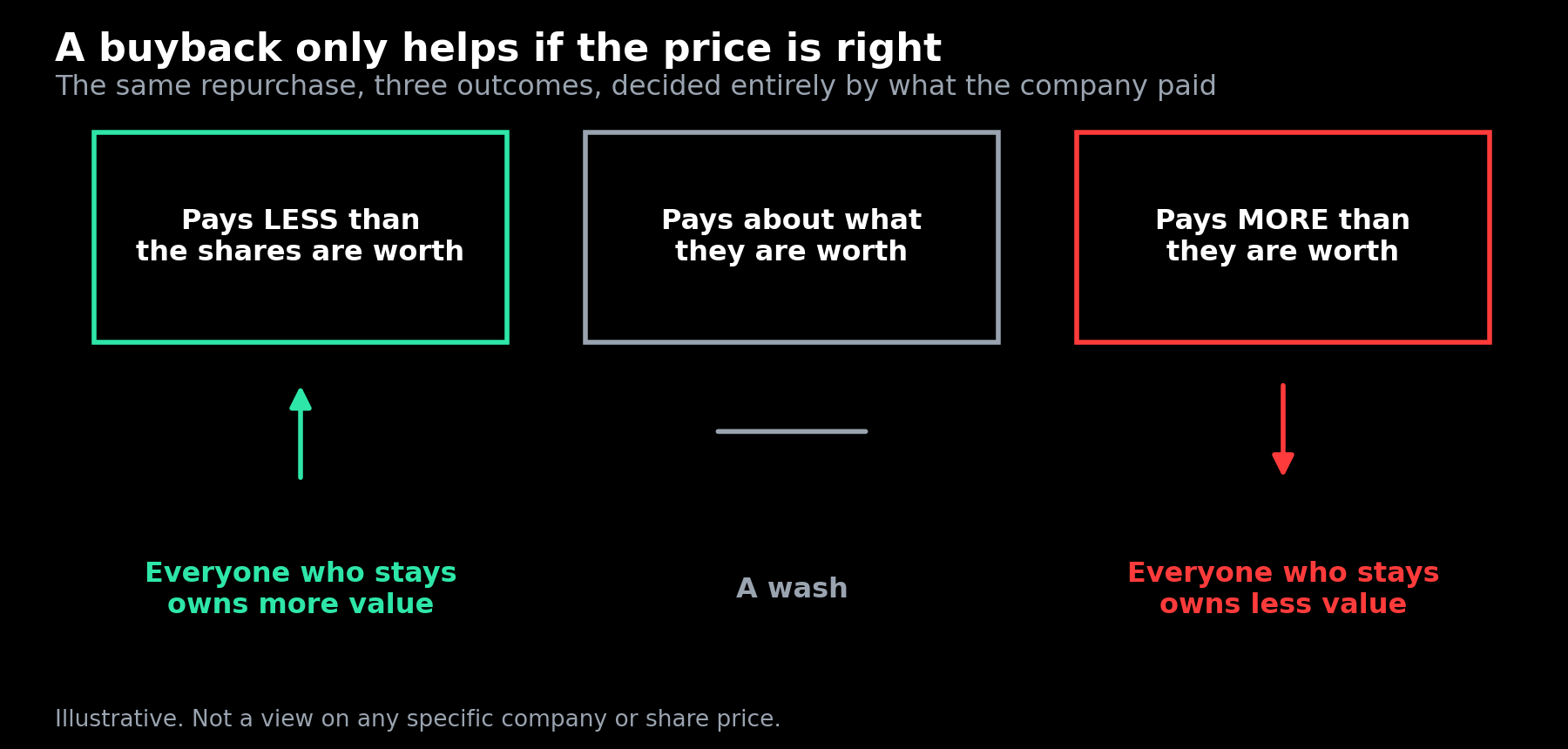
A repurchase helps the people who stay only if the company pays less per share than the shares are actually worth. Then everyone remaining ends up with more value each. Pay more than they're worth and cash left the company for something worth less, and the people who exited got the better end of the trade.
Which means every buyback is management making a valuation call using money that belongs to the shareholders who stayed.
That call can go wrong. US airlines ran heavy repurchase programs through the good years, American Airlines alone around $12 billion, and were asking for federal support by early 2020. The problem wasn't that repurchases are bad. It was the price paid and the timing.
Berkshire Hathaway runs the same tool with the opposite discipline, and says so in writing. It repurchases its own shares only when Buffett judges them to be trading under what the business is worth, and it stops when they aren't. Same mechanism, a rule attached.
What this doesn't tell you
An authorization isn't a purchase. Companies announce these and then move at their own pace, or never finish. Nvidia says this one runs through fiscal 2028.
A chunk of most repurchase programs never shrinks the share count at all. It offsets new shares issued to employees as compensation, which keeps the count flat rather than reducing it. Useful, and unglamorous.
And a rising EPS from a smaller denominator is not a business earning more. Nothing operational changed.
Whether a repurchase helped you comes down to what the shares were worth on the day the company paid. That's the number nobody hands you, and it's the one this entire question turns on. Techdamentals shows every input behind a fair value, so you can form that view yourself instead of taking the announcement's word for it.
Try Techdamentals for seven days, no card needed