Netflix reported Tuesday evening. Revenue came in where the company said it would. Profit margin came in above what it had promised. Earnings per share came in above what analysts expected.
The stock fell to a two-year low.
The explanation is in the release, and the company said it out loud.
What the quarter looked like
Revenue was $12.87 billion, up 11.8% from a year earlier. Netflix had forecast $12.86 billion, so that landed essentially on the number.
The profit figure is where it looks impressive. Operating margin, which is the share of every revenue dollar left over after the costs of running the business, came in at 34.6%. The company had guided to 33.2%. A year ago it was 28.2%. Operating income was $4.46 billion. Earnings were $0.87 a share against the $0.82 analysts expected.
Read that paragraph on its own and you would expect the stock to go up.
Then read what the company said about it.
The margin was a calendar, not an achievement
Netflix attributed the margin coming in above forecast mainly to the timing of expenses.
That phrase does a lot of work, so here is what it means. A company's costs do not arrive evenly. Marketing for a show that launches in December gets spent in December. A production payment scheduled for one quarter can settle in the next. None of that changes what the year costs. It changes which three-month box the cost sits in.
So a margin that comes in high because expenses have not landed yet is not the business getting more profitable. It is the bill arriving late.
And you can see exactly where it went, because the company told you that too. Guidance for the current quarter puts the operating margin at 26.0%, down from the 34.6% just reported. About 1.2 points of that is the cost of job cuts the company recently announced. The rest is, in large part, the expenses that did not land in the quarter everyone was looking at.
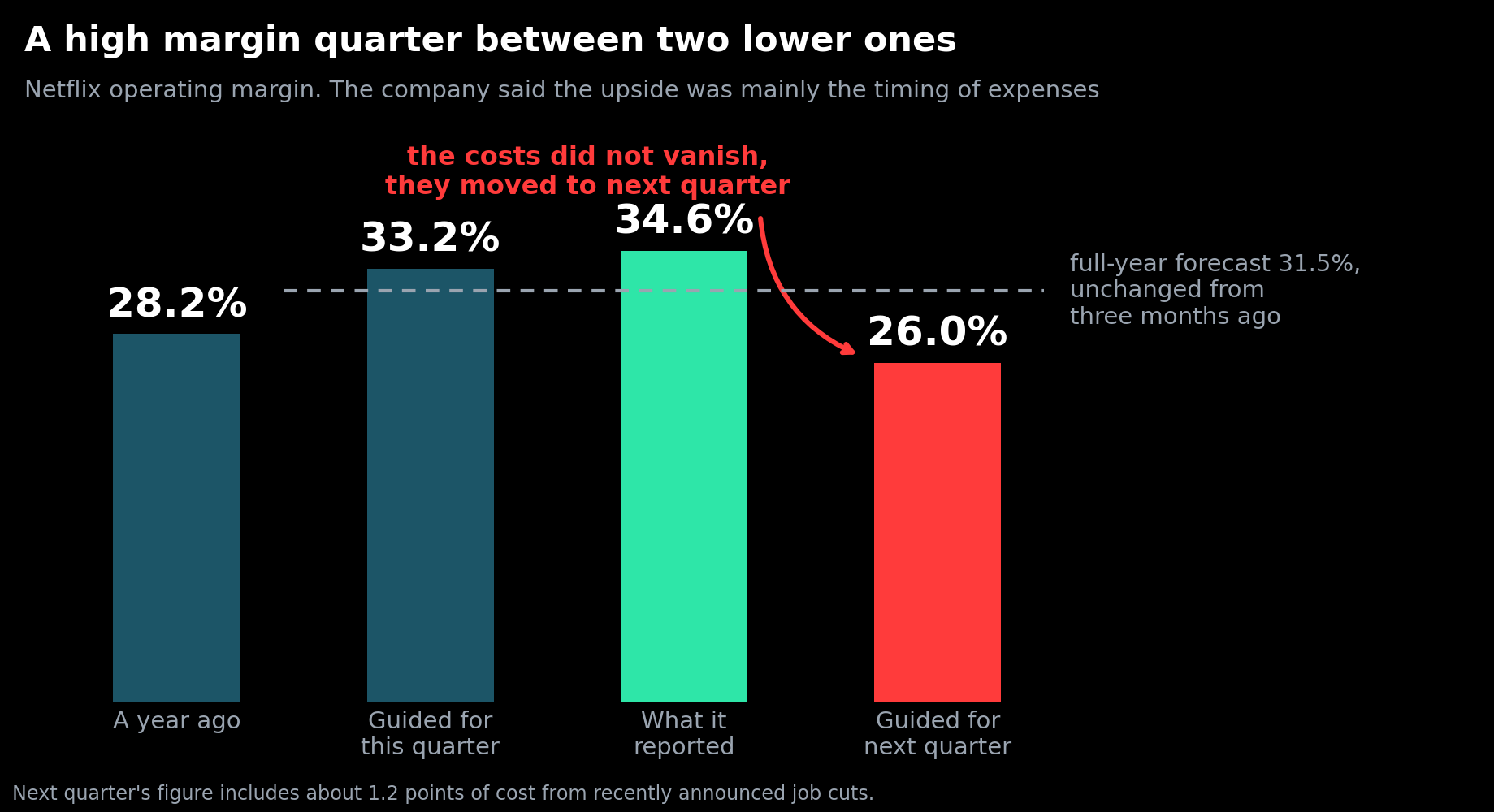
Put the two numbers side by side and the picture changes. A 34.6% quarter followed by a 26.0% quarter is not a company improving. For the full year, the operating margin forecast is 31.5%, exactly where it was three months ago. Nothing about the year changed. The costs just moved around inside it.
This is the single most useful habit to take from an earnings release. When a number comes in better than guided, the next question is always whether something got better or something got delayed. The company usually tells you which, in a sentence most people skip.
Two forecasts went down
The quarter was the past. The two numbers that moved the stock were about the future.
Advertising. Netflix now expects about $2.7 billion of ad revenue this year, down from about $3 billion. That is a cut of roughly 10% to the forecast for the business that was supposed to be the next growth engine. The reason given was a slower than expected rollout of some advertising product capabilities, which in plain terms means the tools advertisers need were not ready on schedule.
Free cash flow. The full-year figure went to about $12.0 billion from about $12.5 billion.
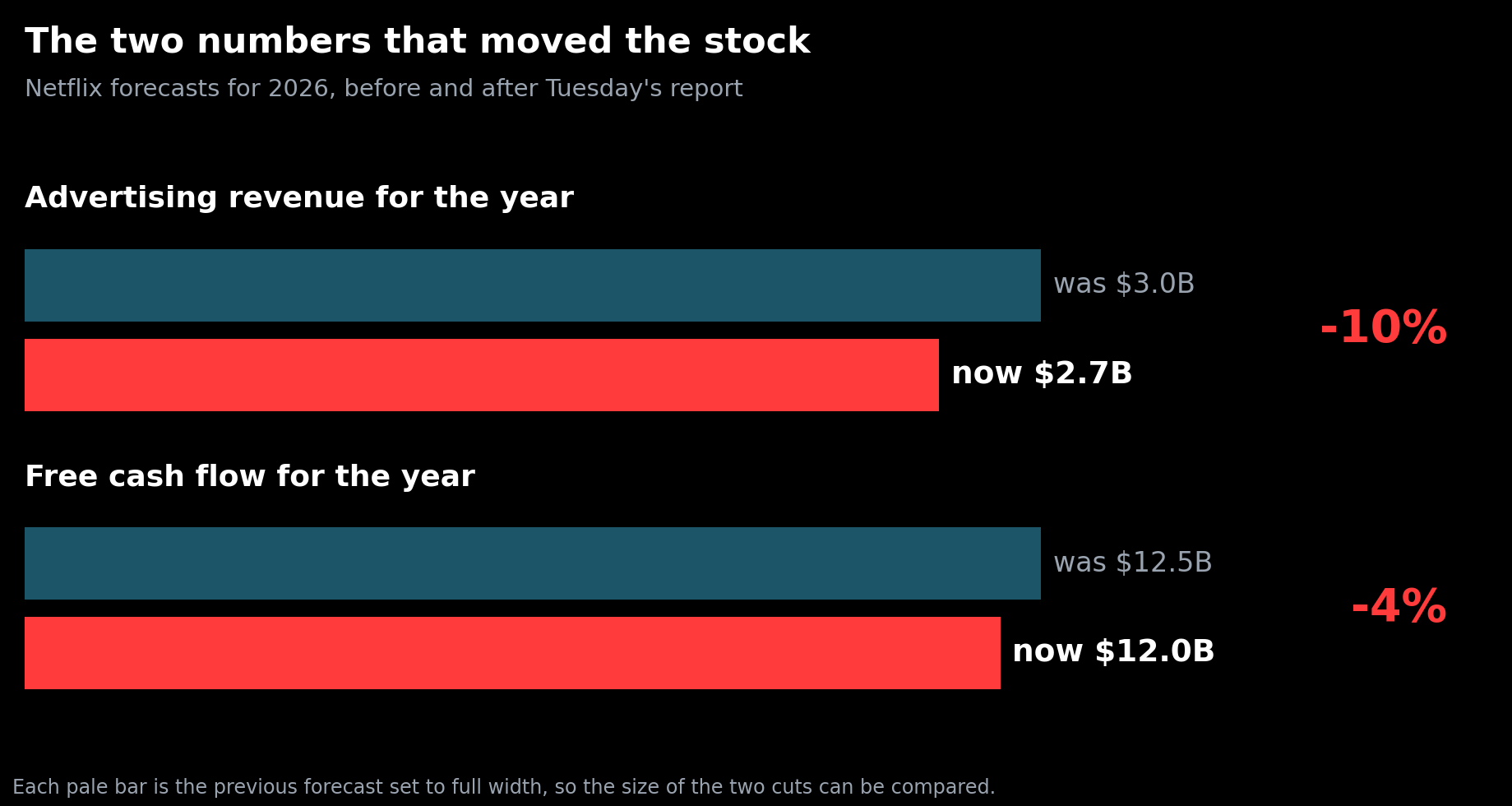
That second one deserves a caveat, and leaving it out would be unfair. The company attributed the free cash flow change mainly to a real estate transaction it expects to close in the current quarter. A property purchase is a one-off that has nothing to do with whether the underlying business generates cash. It is a genuinely different kind of reduction from the advertising one.
The advertising cut is the one that matters, because it is about demand rather than timing. Subscription revenue, Netflix said, has actually run ahead of its own expectations. The problem is not that people stopped paying for Netflix. It is that the part of the plan that was supposed to add a second revenue stream is running late.
What this does not tell you
It does not tell you the quarter was bad. Revenue grew 11.8%, the operating margin for the full year is holding at 31.5%, price increases were taken in several markets including the United States and the company says the customer response was in line with what it expected. A business doing that is not in trouble. It is a business whose stock was priced for something slightly better.
It does not tell you the advertising plan has failed. A delayed product rollout and a failed product look identical for one quarter and completely different over three years. The honest position is that this release cannot distinguish between them, and the next two quarters can.
And it does not tell you the stock was right to fall. A two-year low is a fact about price, not a verdict on a company. Markets reprice on changed expectations, and changed expectations are frequently wrong in both directions. What you can say is narrower and more useful: the stock fell on guidance, not on results, which means the market cared more about the two forecasts than about the quarter that was actually reported.
That gap between what a company reports and what the market cares about is the thing worth internalising. A quarterly figure is a measurement of the past. A share price is an estimate about the future. They are different objects, and the second one is made of assumptions. Techdamentals shows every assumption behind the fair value it produces, including the full range that four separate methods span, because a number with its assumptions hidden invites exactly the confusion on display this week.